
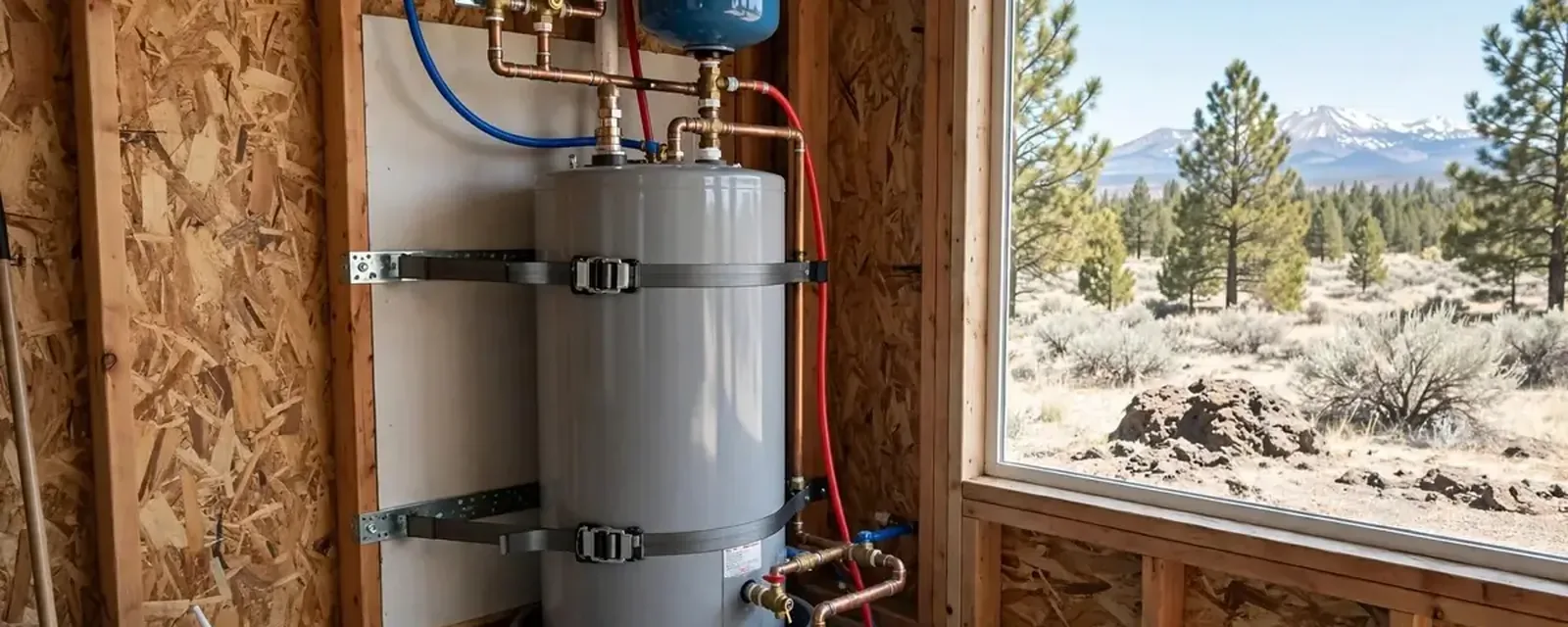
Water Heater Heat Trap Installation: A Camas, WA Guide
A heat trap is a small part that keeps hot water from drifting out of the tank. Here is what it does, how it fails and how to replace it.
What a Heat Trap Is
A heat trap is a pair of fittings, called nipples, that screw into the top of a water heater where the hot and cold lines connect. Inside each one is a small ball or flap that lets water flow in the intended direction and blocks it from drifting the other way.
The point is to stop thermosiphoning. Hot water is lighter than cold water, so without a trap it can rise out of the tank into the pipes and cool, which wastes energy and sends lukewarm water back toward the tank.
Why Heat Traps Matter
- They cut standby heat loss, which saves energy in a tank that sits idle most of the day.
- They keep hot water in the tank instead of the first few feet of pipe.
- They are standard on new water heaters, and many come with traps built in.
- They can fail or clog over time and cause noise or reduced flow.
Some homes have heat traps made with plastic balls that can warp or stick when overheated. If the traps fail, you may notice rattling or a slow flow of hot water at the tap.
Signs a Heat Trap Needs Attention
Rattling or ticking
A loose ball bouncing inside the nipple as water flows.
Weak hot flow
A stuck or clogged trap restricts water leaving the tank.
Hot pipe at the top
Warmth rising into the line when no one is using water.
Leak at the fitting
Corrosion or loose threads at the nipple.
How Heat Trap Installation Works
A plumber turns off the power or gas and the water, drains part of the tank, and unscrews the old nipples with the proper tools. The new traps go in with thread sealant rated for hot water, and they are marked hot and cold so the flow runs in the right direction.
Because the threads on a tank are fragile, a stuck nipple can damage the tank, and this is a job where a plumber's experience helps. If your tank is old and leaking at the top, replacing the unit may be wiser, and our water heater replacement page explains how we choose one.
| Option | Description | Watch for |
|---|---|---|
| Built-in traps | Factory fitted inside the tank | Cannot be replaced separately |
| Ball-type nipples | Small plastic or metal ball inside | Can rattle or stick |
| Flapper-type nipples | A hinged flap closes against back-flow | Can wear with age |
| Loop piping | Piping loop that creates a trap | Needs room and correct layout |
| No trap | Older installations | Higher standby heat loss |
Heat Traps and Other Parts at the Top of the Tank
While the top of the tank is open, it is a good moment to check the connections around it. Flexible connectors, dielectric unions, the expansion tank and the temperature and pressure relief valve all sit up there, and any one of them can leak or wear out.
A tank installed with a closed system, such as one with a backflow device or a pressure reducing valve, usually needs an expansion tank to absorb the extra pressure from heated water. A plumber can check this during a visit.
Water heater acting up?
Call and we will check the connections and the heat traps.
Water Heaters, Code and Utilities in Camas
The City of Camas Building Division administers the state-adopted plumbing code, and the 2021 I-Codes took effect on March 15, 2024. Water heater work that changes venting, fuel or location may require a permit, so ask the Building Division before you start.
Clark Public Utilities has a program for heat pump water heaters that replace electric resistance storage tanks, tied to the Northern Climate Specification. Heat pump units come with their own connections, so tell your plumber if you are considering one.
Many new tanks have heat traps built in to meet federal efficiency standards, and the Uniform Plumbing Code (UPC) governs the rest of the connections at the top of the tank.
Choosing Between Repair and Replacement
If the heat trap is the only problem and the tank is sound, replacing the nipples is a modest repair. If the tank is more than ten years old, leaking at the top or showing rust, spending money on parts may be wasteful.
A plumber can look at the whole unit and tell you which makes sense. Our water heater repair page explains the usual checks, and a heat trap is one of several small parts that can wear.
Safety Notes for Working at the Top of a Tank
- Turn off power or gas and let the tank cool before opening any fitting.
- Close the cold supply and relieve pressure with a hot tap before you loosen a nipple.
- Use the right wrench and support the tank, since the threads can strip.
- Check the gas connection for leaks after any work on a gas unit.
- Never cap or block the temperature and pressure relief valve.
Tools and Parts for a Heat Trap Swap
- Two new heat trap nipples that match the tank connection size.
- Pipe thread sealant or tape rated for hot water.
- A pipe wrench and a second wrench to hold the fitting.
- A bucket, a hose and towels for the water that drains.
- New flexible connectors if the old ones are tired.
Marking the hot and cold sides matters because a trap installed backward restricts flow. Check the arrows or colored markings on the nipples and match them to the tank.
After the install, open a hot tap to purge air, check for leaks at the threads and restore power or gas only when the tank is full.
Key Takeaways
- Heat traps stop hot water from drifting out of the tank.
- Many new tanks have them built in.
- Rattling and weak hot flow can point to a failed trap.
- A plumber should handle stuck nipples to protect the tank threads.
Questions About Heat Traps in Camas
Does every water heater need heat traps?
Many new tanks have them built in, and older tanks may not. Ask a plumber what your unit has.
Can I install a heat trap myself?
It is possible, but the threads on the tank are delicate and a stuck fitting can damage it. A plumber is the safer choice.
Why is there a rattle at the top of my water heater?
A loose ball in a heat trap nipple can rattle, and so can water hammer. A plumber can find the source.
Do heat traps save money?
They reduce standby heat loss, which saves a small amount of energy over time.
Do you service water heaters in Washougal?
Yes. See our Washougal plumbing page for the area we serve.
Camas Express Plumbing Coverage Map
We work out of Camas and cover the city, plus nearby Clark County towns such as Washougal. See the full list on our service area page.
Plumbing Trouble In Camas? Call Now
Our line is open around the clock. Tell us what is happening and we will line up the next step.
☎ (360) 371-6092